CDC Eviction Moratorium: Why It's a Big Deal


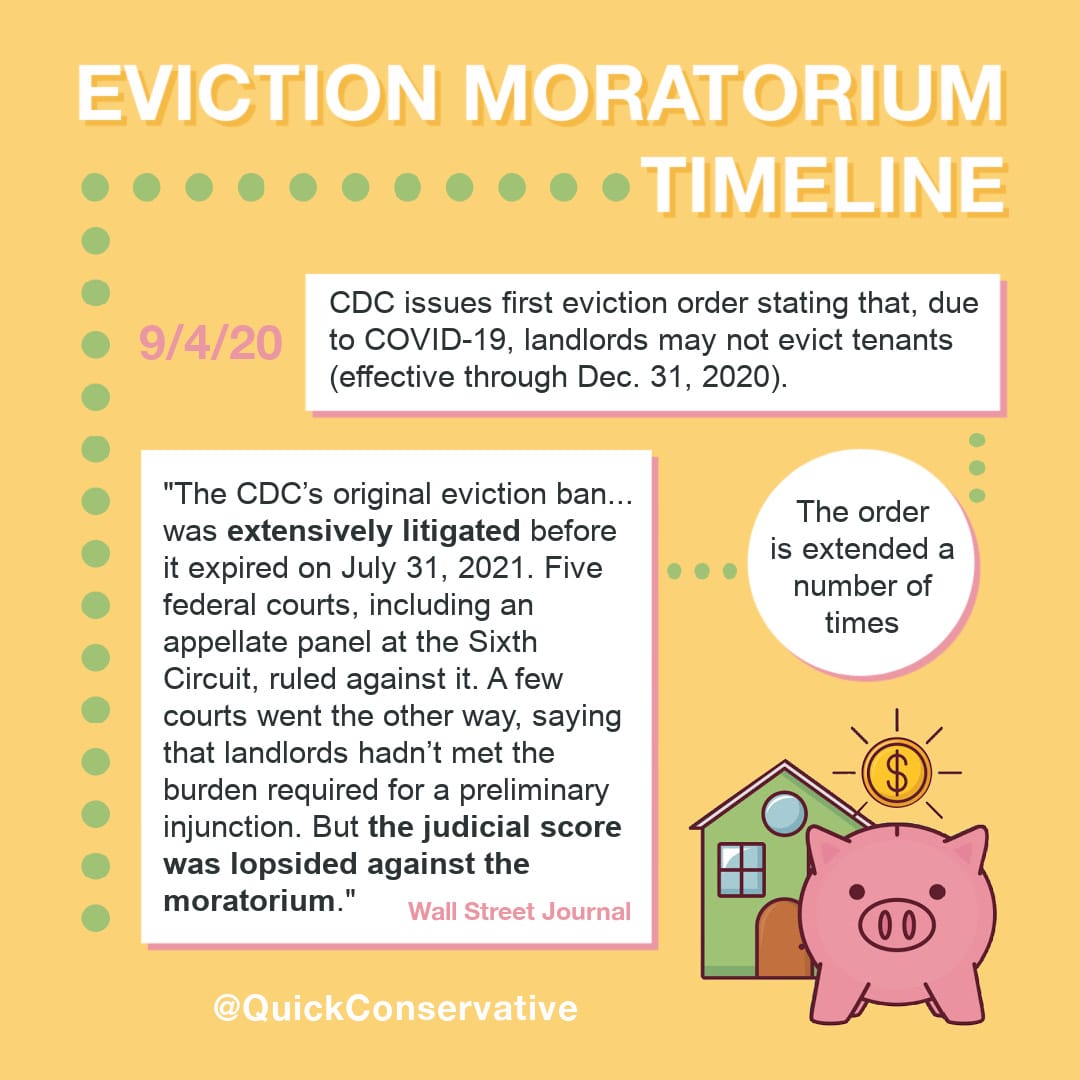
The original eviction moratorium was issued September 4, 2020. The moratorium was extended several times (see: CDC Director Rochelle Walensky's January 20, 2021 statement, along with an exact timeline of each extension in the August 3, 2021 order).
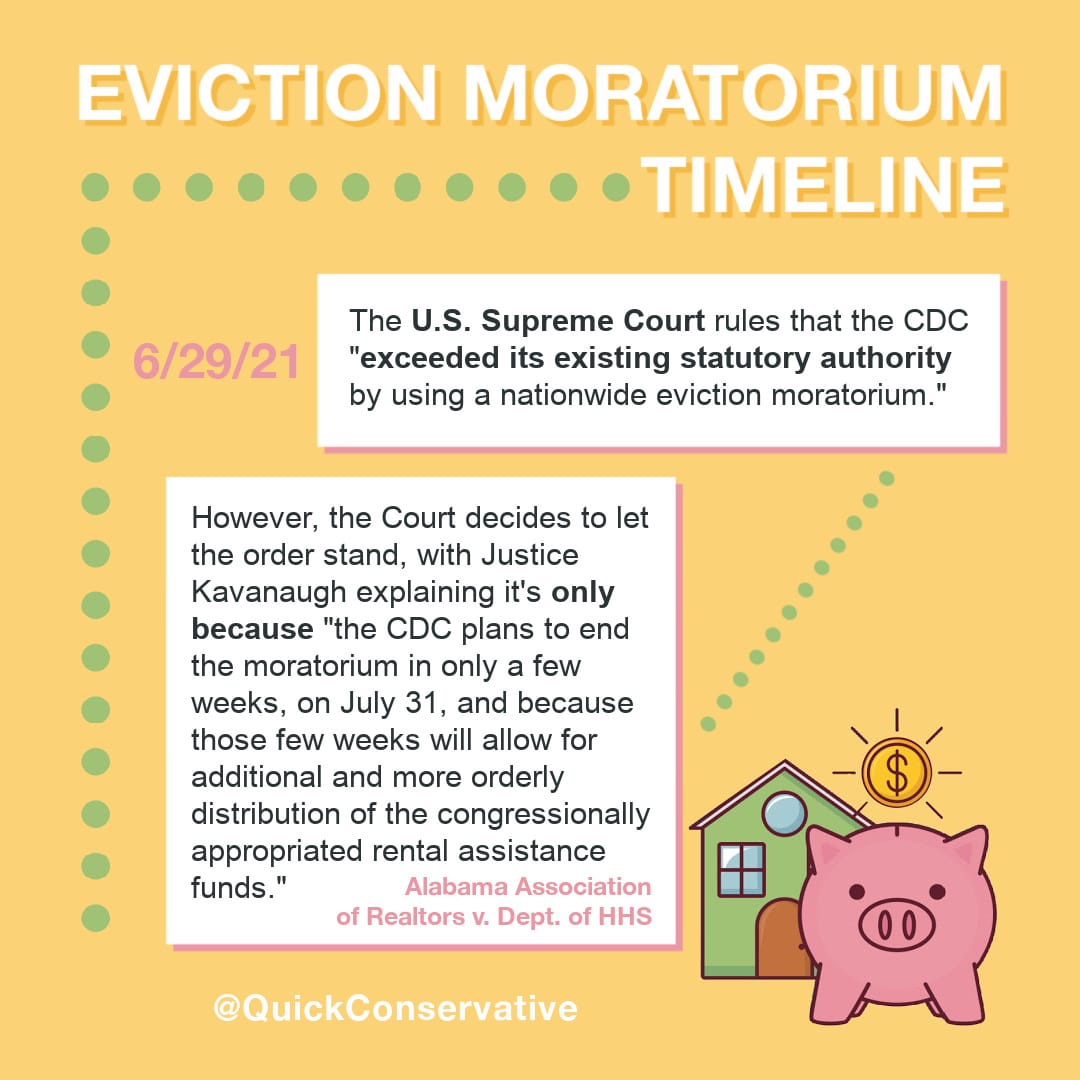
On June 29, 2021, the U.S. Supreme Court acknowledged that the CDC had "exceeded its existing statutory authority," but let the eviction ban stand until it expired. However, Justice Kavanaugh noted the stay was only granted because "the CDC plans to end the moratorium in only a few weeks, on July 31, and because those few weeks will allow for additional and more orderly distribution of the congressionally appropriated rental assistance funds."
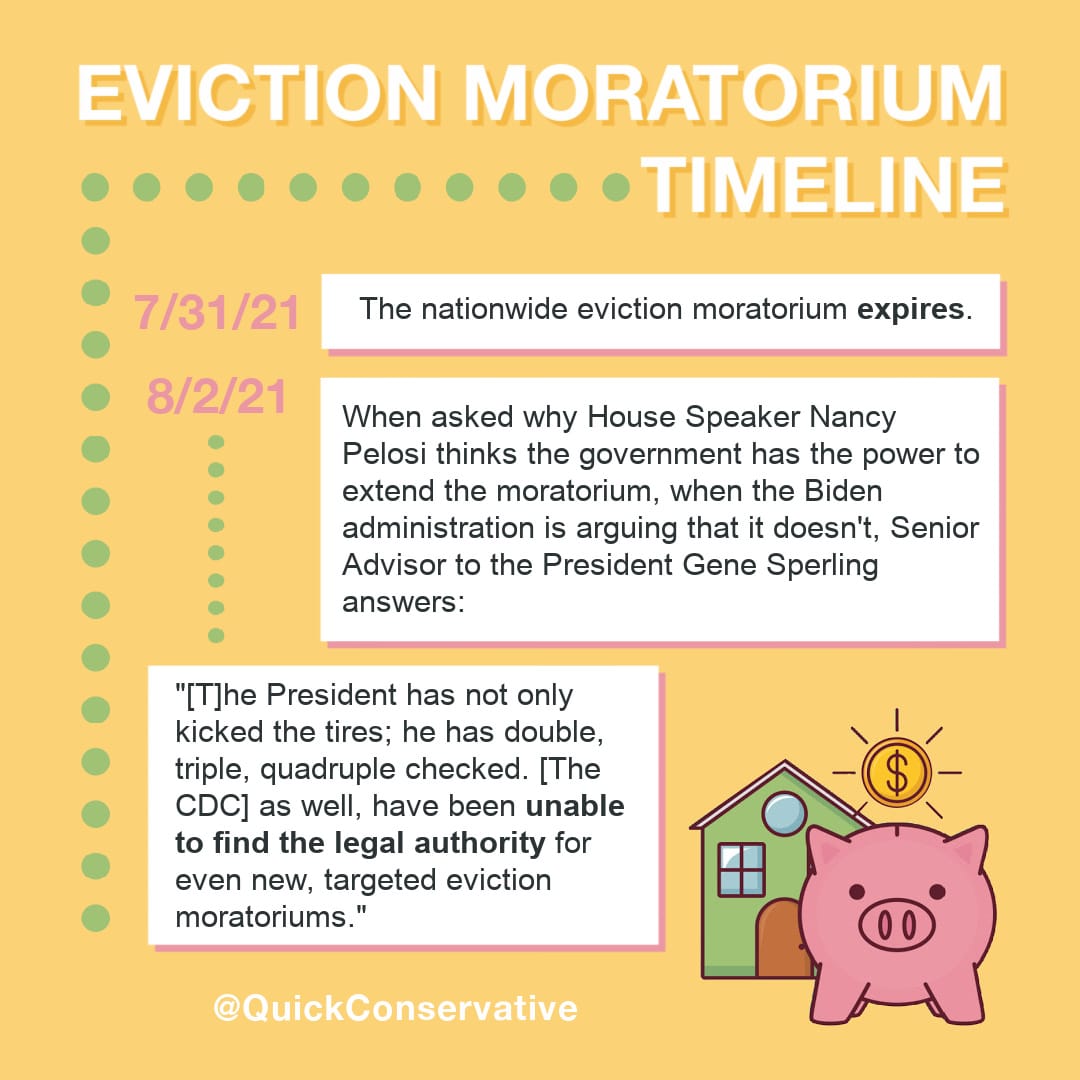
On August 2, 2021 - when asked why House Speaker Nancy Pelosi thinks the government has the power to extend the moratorium, when the Biden administration is arguing that it doesn't, White House American Rescue Plan Coordinator and Senior Advisor to the President Gene Sperling answered:
Well, I would say that on this particular issue, the President has not only kicked the tires; he has double, triple, quadruple checked. He has asked the CDC to look at whether you could even do targeted eviction moratorium — that just went to the counties that have higher rates — and they, as well, have been unable to find the legal authority for even new, targeted eviction moratoriums.
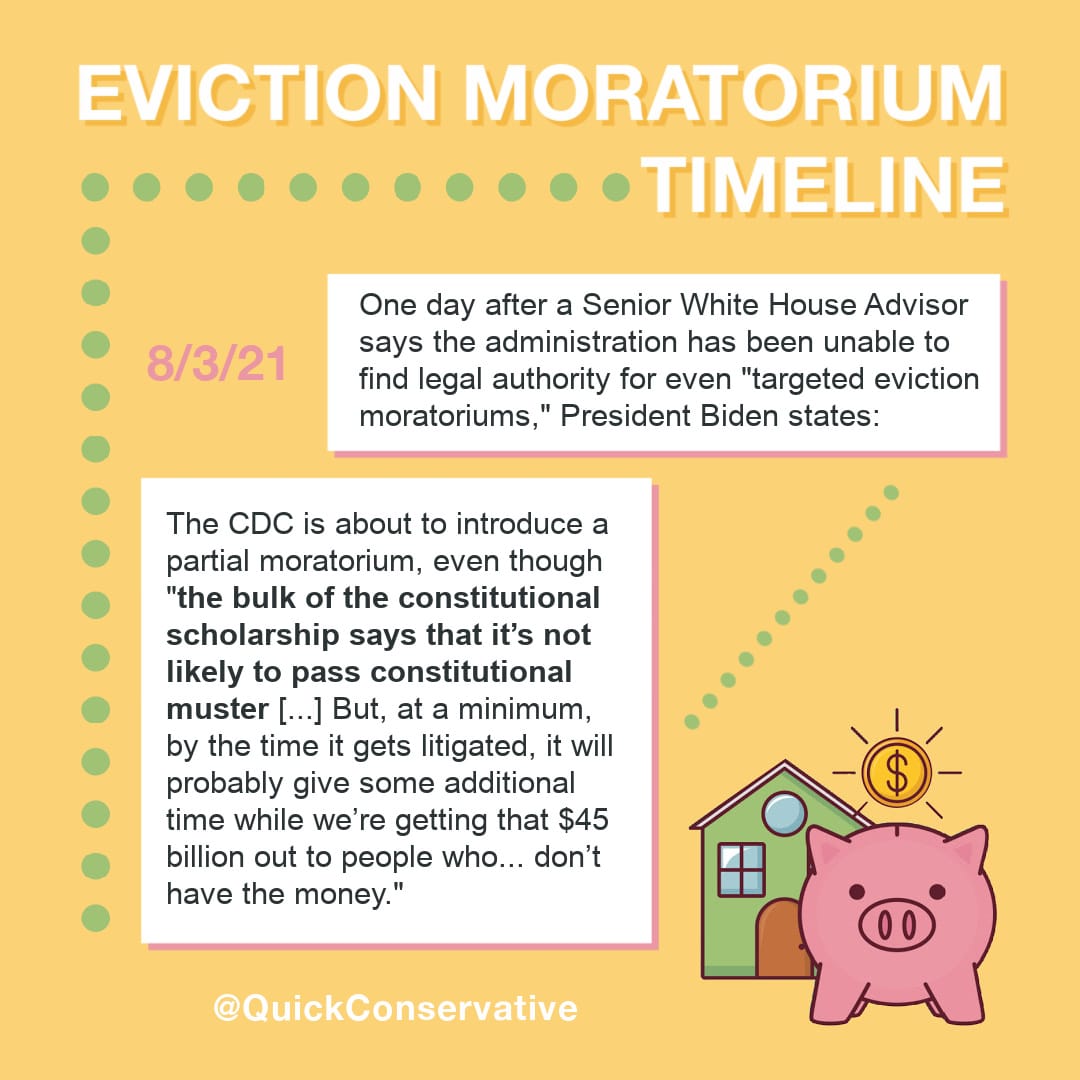
On August 3, 2021, a day after a Senior White House Advisor said the administration's been unable to find legal authority for even "targeted eviction moratoriums," President Biden answered a related question, stating:
The bulk of the constitutional scholarship says that it’s not likely to pass constitutional muster. Number one. But there are several key scholars who think that it may and it’s worth the effort. [...] I have been informed [the CDC is] about to make a judgment as to potential other options. Whether that option will pass constitutional measure with this administration, I can’t tell you. I don’t know. There are a few scholars who say it will and others who say it’s not likely to. But, at a minimum, by the time it gets litigated, it will probably give some additional time while we’re getting that $45 billion out to people who are, in fact, behind in the rent and don’t have the money.
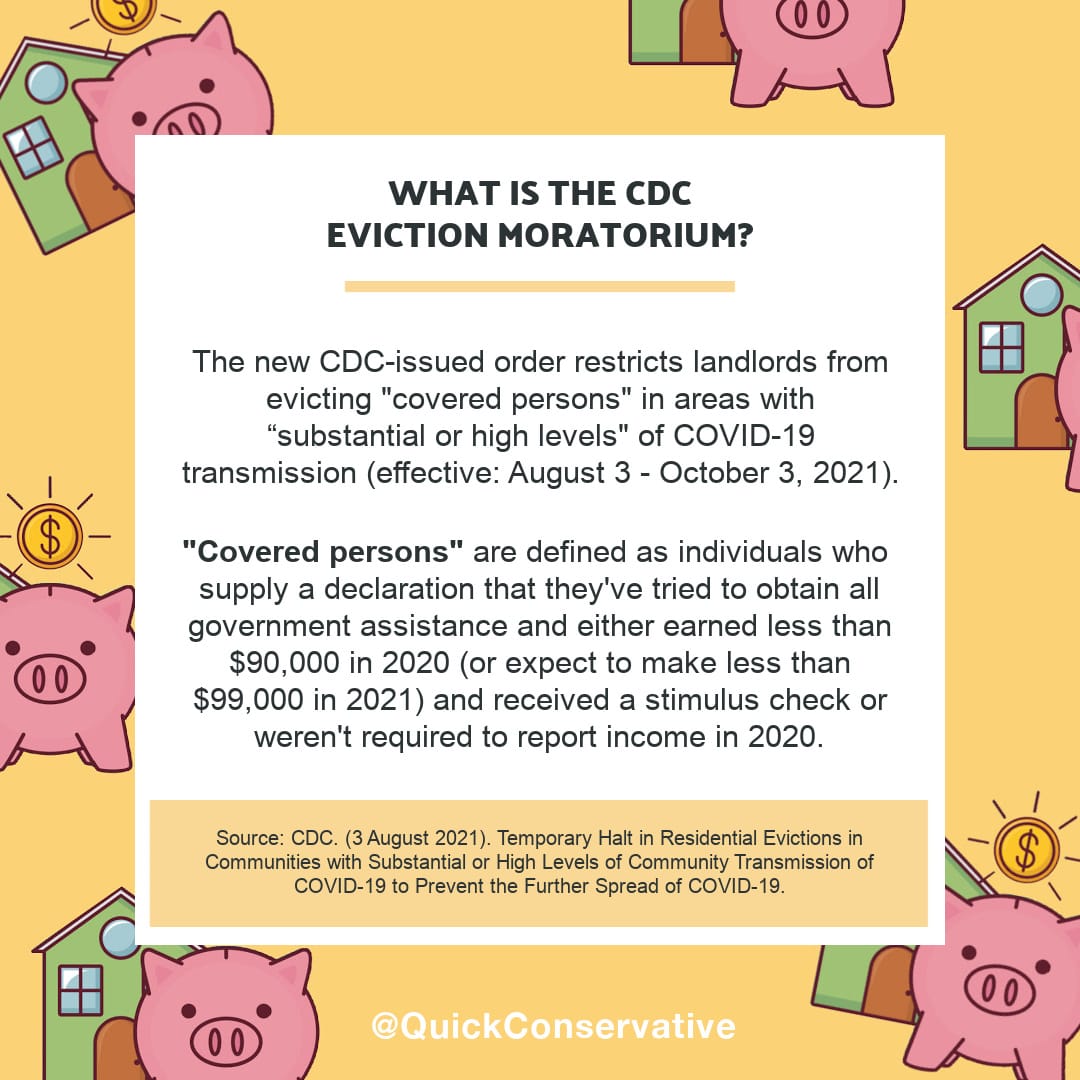
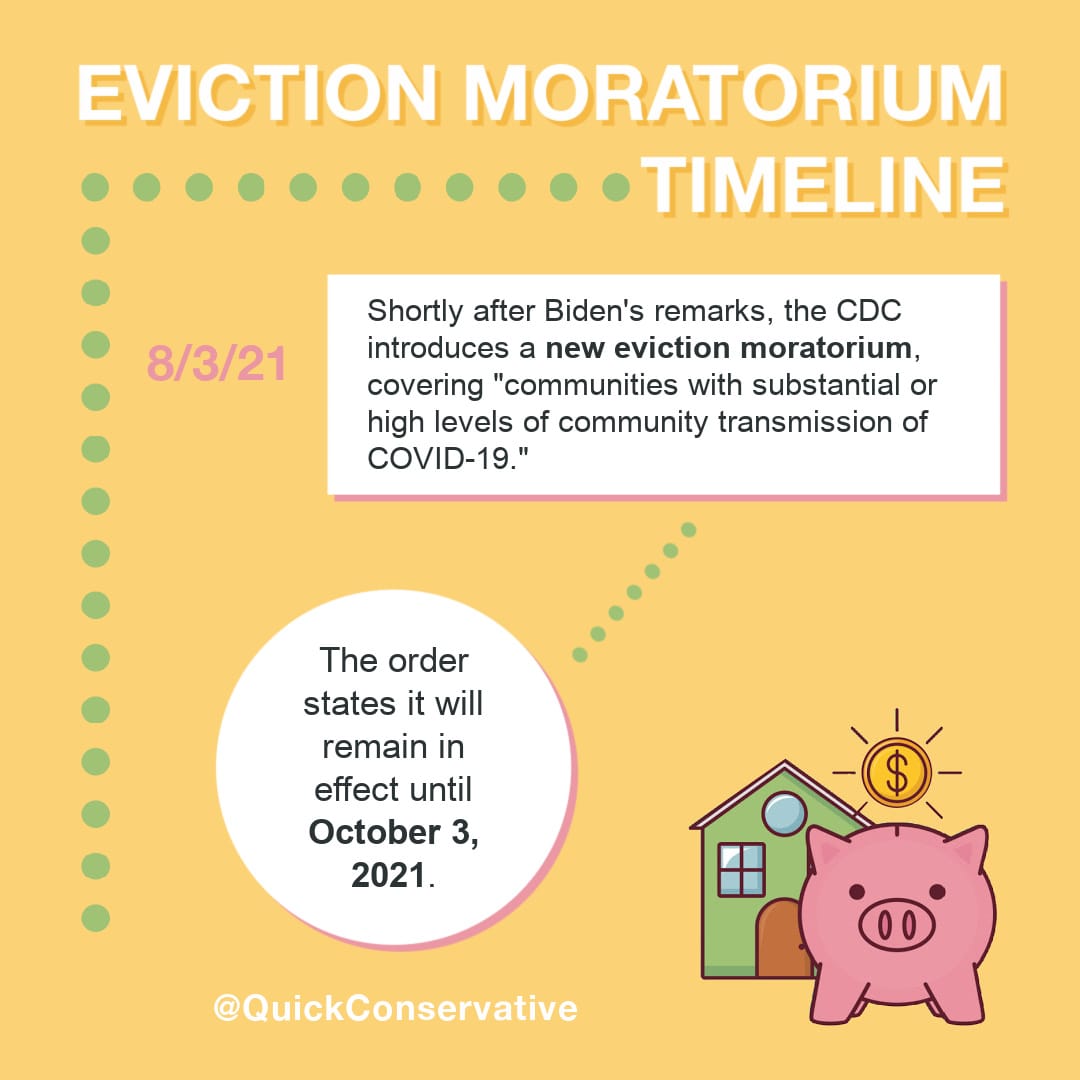
On August 3, 2021, after President Biden's remarks, the CDC introduced a new eviction moratorium, covering "communities with substantial or high levels of community transmission of COVID-19." The order states it will remain in effect until October 3, 2021.
By applying the moratorium to all areas with “substantial or high levels of community transmission,” the new order restricts the ability of landlords to evict "covered" tenants in 83% of all counties (as of August 4, 2021).
"Covered persons" are defined as individuals who supply a declaration that they've tried to obtain all government assistance and either earned less than $90,000 in 2020 (or expect to make less than $99,000 in 2021) and received a stimulus check or weren't required to report income in 2020.
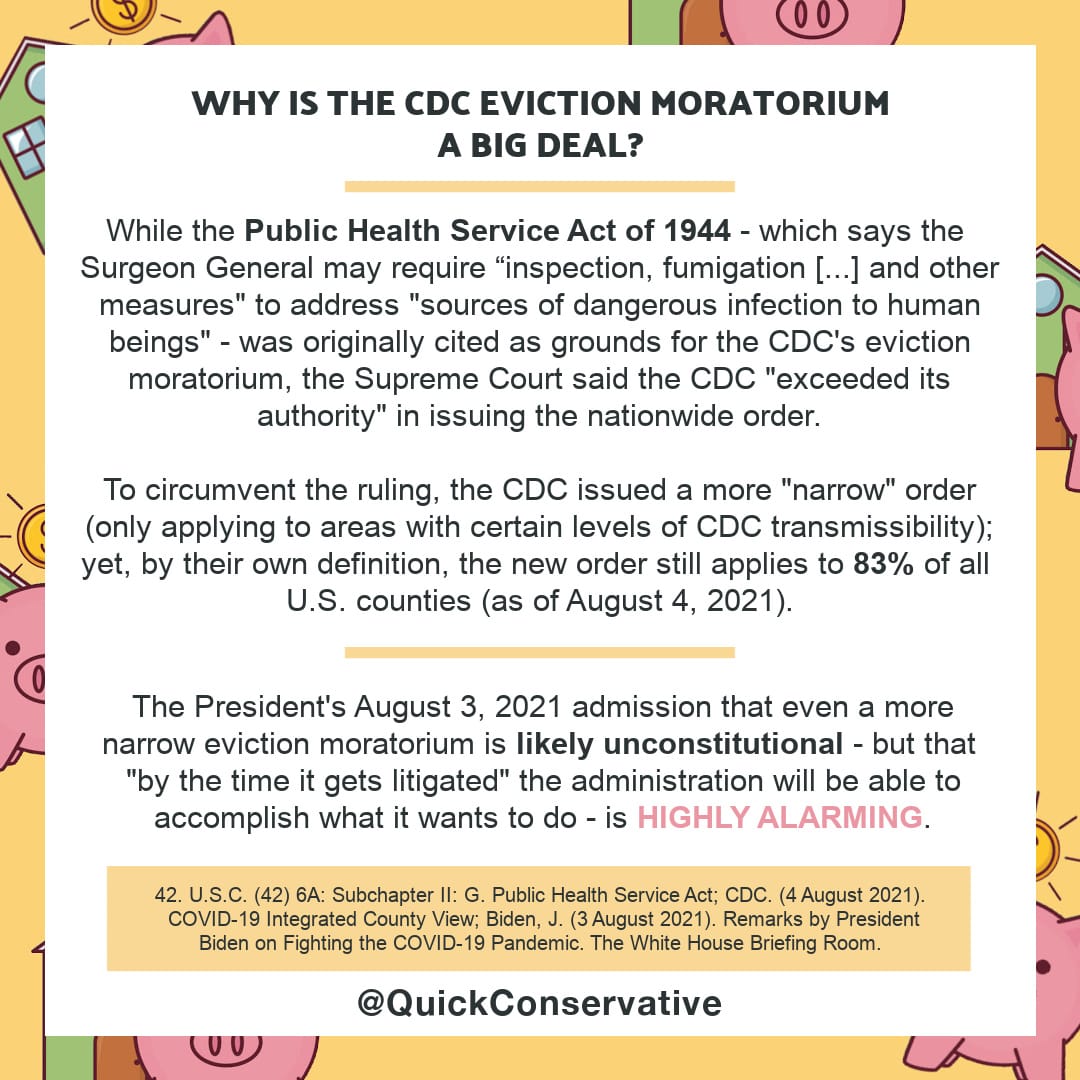
While the Public Health Service Act of 1944 - which says the Surgeon General may require “inspection, fumigation [...] and other measures" to address "sources of dangerous infection to human beings" - was originally cited as grounds for the CDC's eviction moratorium, the Supreme Court said the CDC "exceeded its authority" in issuing the original nationwide order.
To circumvent the ruling, the CDC issued a more "narrow" order (only applying to areas with certain levels of CDC transmissibility); yet, by their own definition, the new order still applies to 83% of all U.S. counties (as of August 4, 2021).
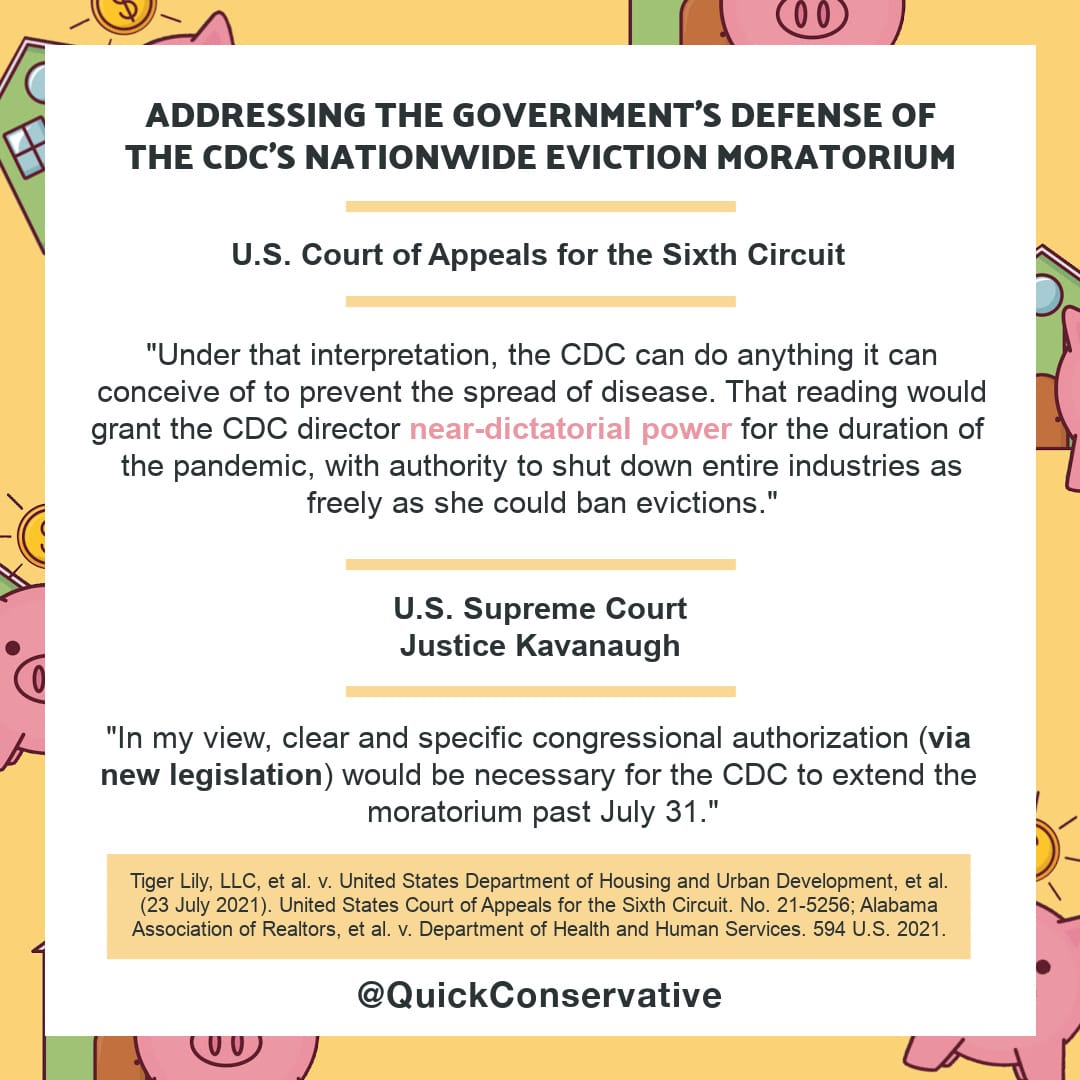
Addressing the government's defense of the the CDC's nationwide eviction moratorium, the U.S. Court of Appeals for the Sixth Circuit decided on July 23, 2021:
Under that interpretation, the CDC can do anything it can conceive of to prevent the spread of disease. That reading would grant the CDC director near-dictatorial power for the duration of the pandemic, with authority to shut down entire industries as freely as she could ban evictions.
Concurring in the Supreme Court's decision, Justice Kavanaugh wrote:
In my view, clear and specific congressional authorization (via new legislation) would be necessary for the CDC to extend the moratorium past July 31.
Yet, despite this new legislation, the Biden administration has decided to move forward.
Biden, J. (3 August 2021). Remarks by President Biden on Fighting the COVID-19 Pandemic. The White House Briefing Room.
Centers for Disease Control and Prevention (CDC). (4 Sept. 2020). Temporary Halt in Residential Evictions To Prevent the Further Spread of COVID-19. Document Number: 2020-19654.
Walensky, R.P. (20 January 2021). Media Statement from CDC Director Rochelle P. Walensky, MD, MPH, on Extending the Eviction Moratorium.
The Editorial Board. (4 August 2021). President Biden’s Lawless Eviction Ban. Wall Street Journal.
Alabama Association of Realtors, et al. v. Department of Health and Human Services. 594 U.S. 2021.
Sperling, G. (2 August 2021). Press Briefing by Press Secretary Jen Psaki and White House American Rescue Plan Coordinator and Senior Advisor to the President Gene Sperling, August 2, 2021. The White House Briefing Room.
CDC. (3 August 2021). Temporary Halt in Residential Evictions in Communities with Substantial or High Levels of Community Transmission of COVID-19 to Prevent the Further Spread of COVID-19.
CDC. (4 August 2021). COVID-19 Integrated County View.
42. U.S.C. (42) 6A: Subchapter II: G. Public Health Service Act.
Tiger Lily, LLC, et al. v. United States Department of Housing and Urban Development, et al.. (23 July 2021). United States Court of Appeals for the Sixth Circuit. No. 21-5256.