Poverty & Parenting


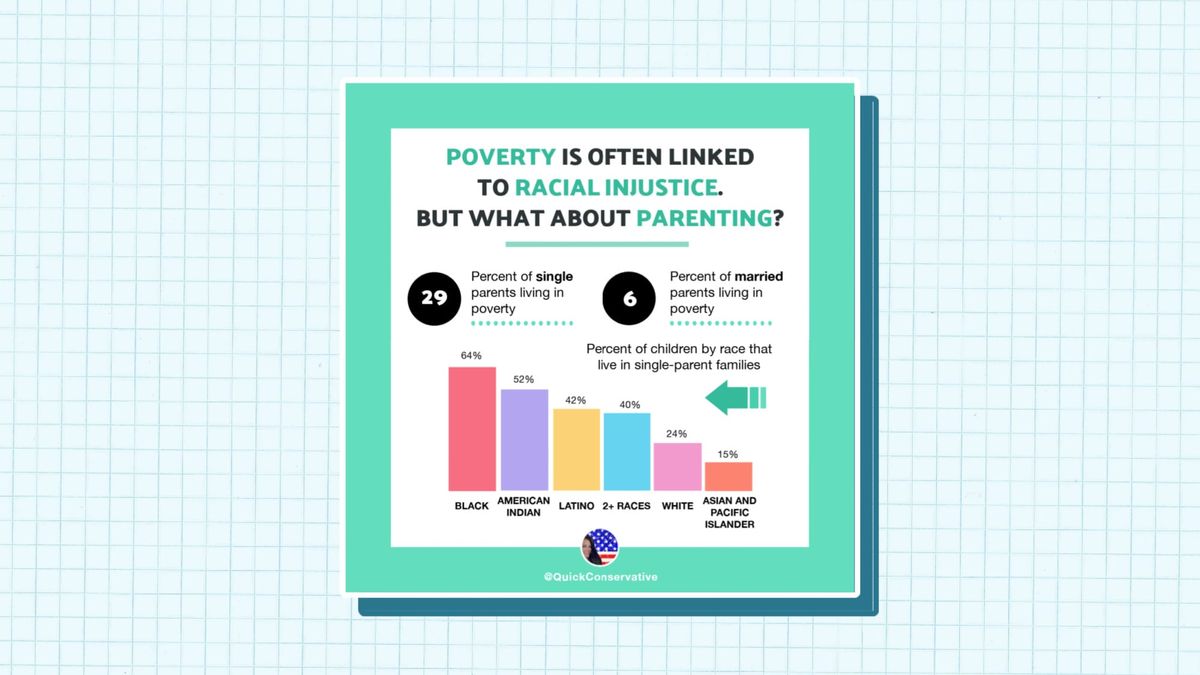
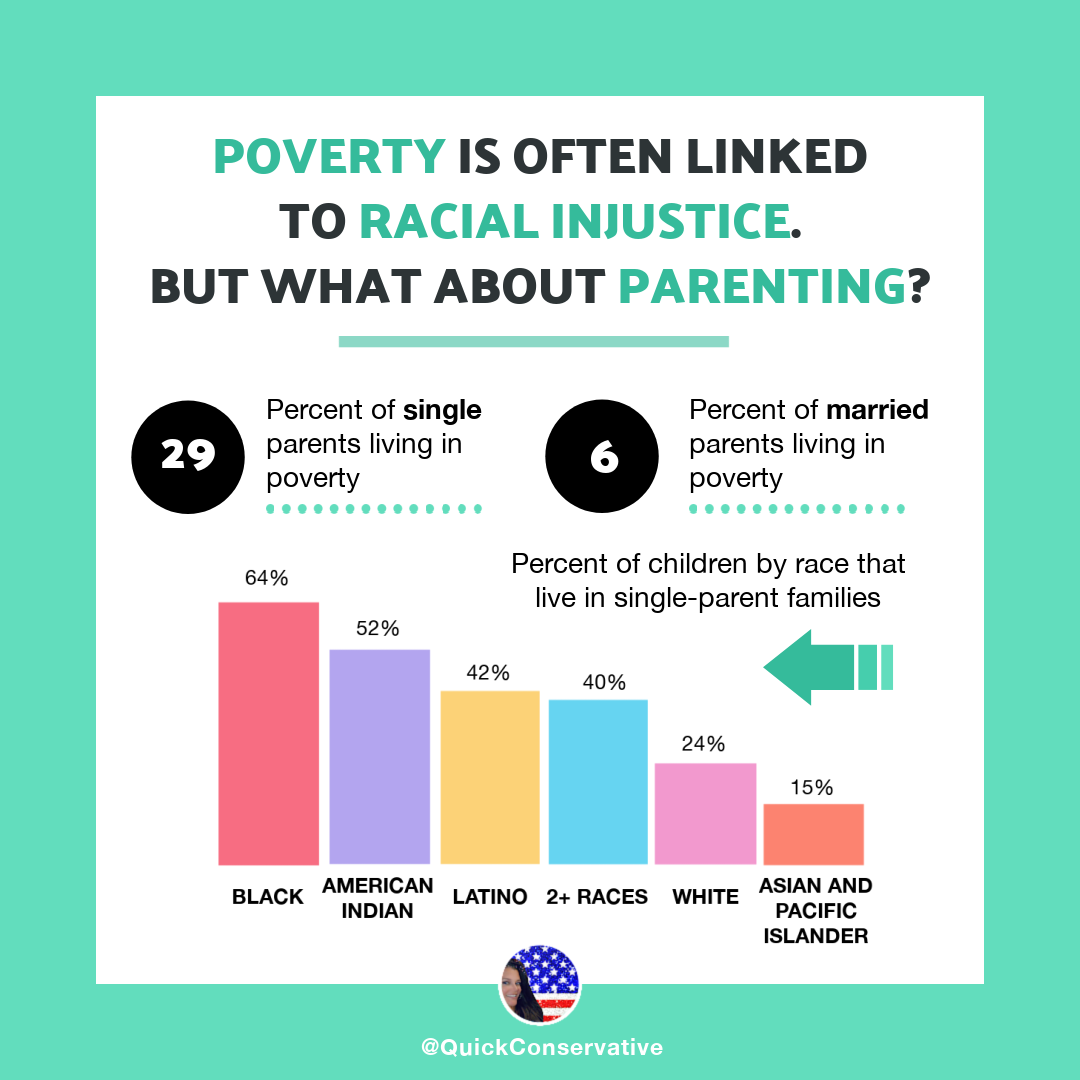
As of 2019, 29% of single parents live in poverty.
As of 2019, 6% of married parents live in poverty.
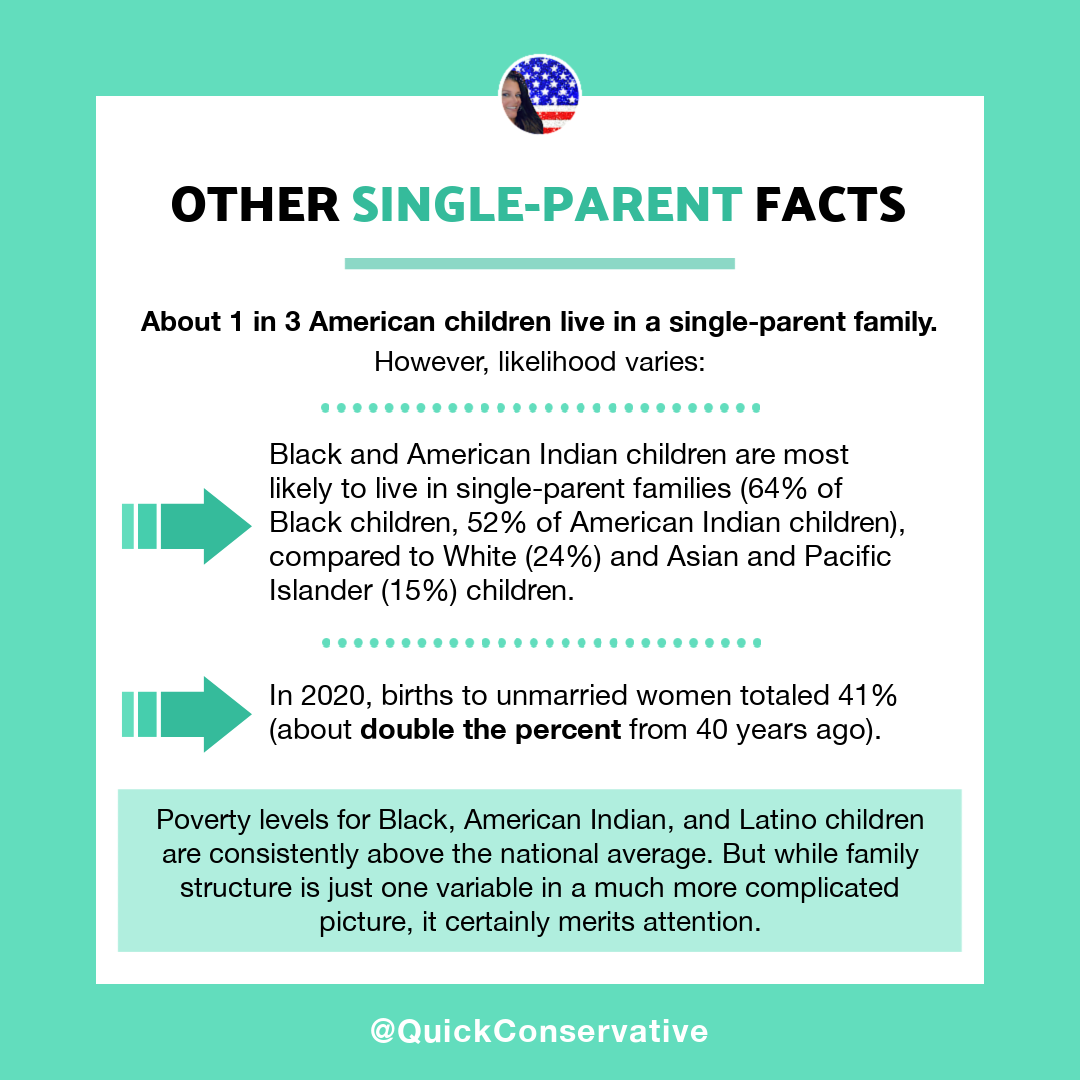
Percent of children by race that live in single-parent families, as of 2019:
Poverty levels for Black, American Indian, and Latino children are consistently above the national average. But while family structure is just one variable in a much more complicated picture, it certainly merits attention.
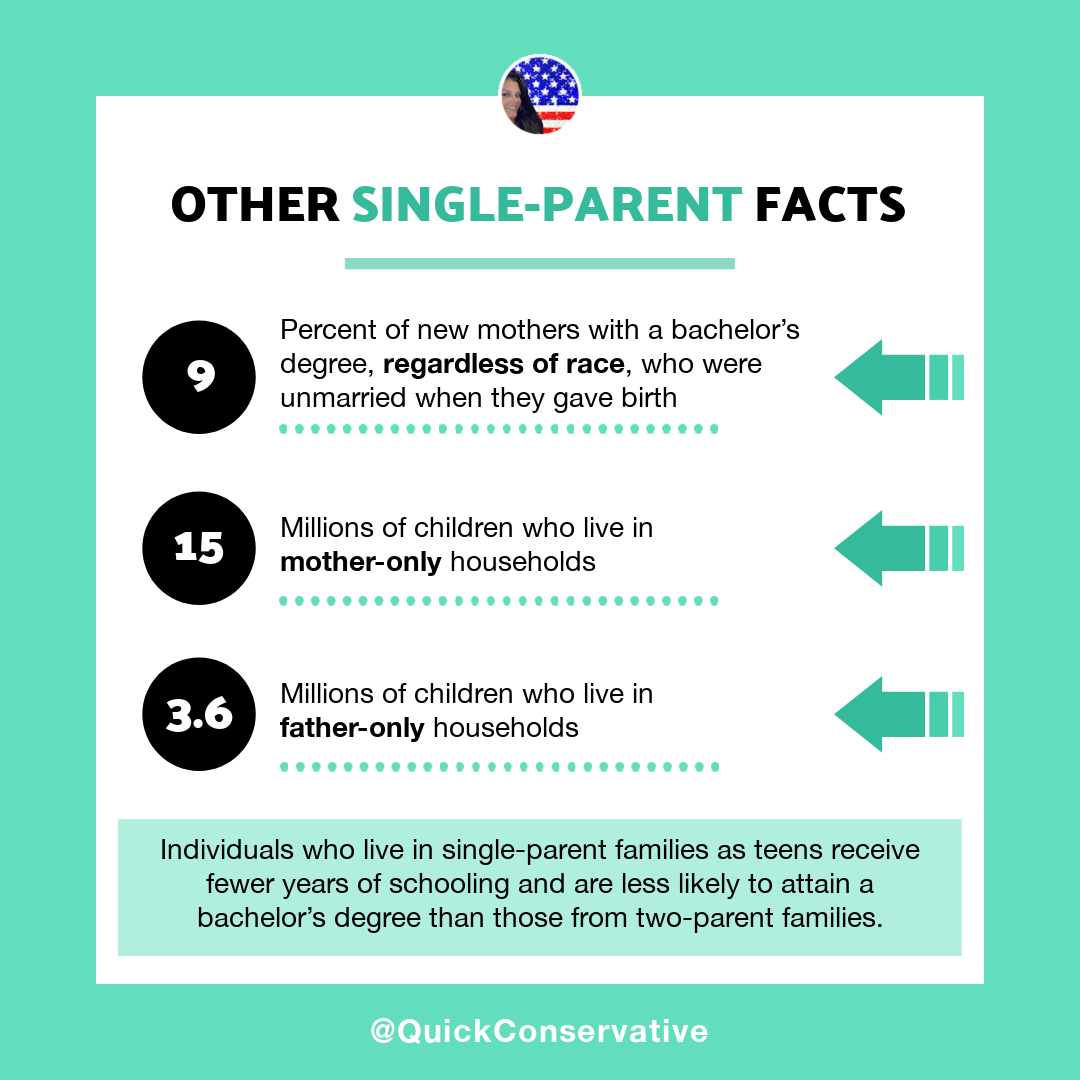
Nine percent of new mothers with a bachelor’s degree, regardless of race, were unmarried when they gave birth, according to 2013 data.
Fifteen million children live in mother-only households, according to 2019 data.
Three million six hundred thousand children live in father-only households, according to 2019 data.
Individuals who live in single-parent families as teens receive fewer years of schooling and are less likely to attain a bachelor’s degree than those from two-parent families.
About 1 in 3 American children live in a single-parent family.
In 2020, births to unmarried women totaled 41% - about double the percentage from 40 years ago.
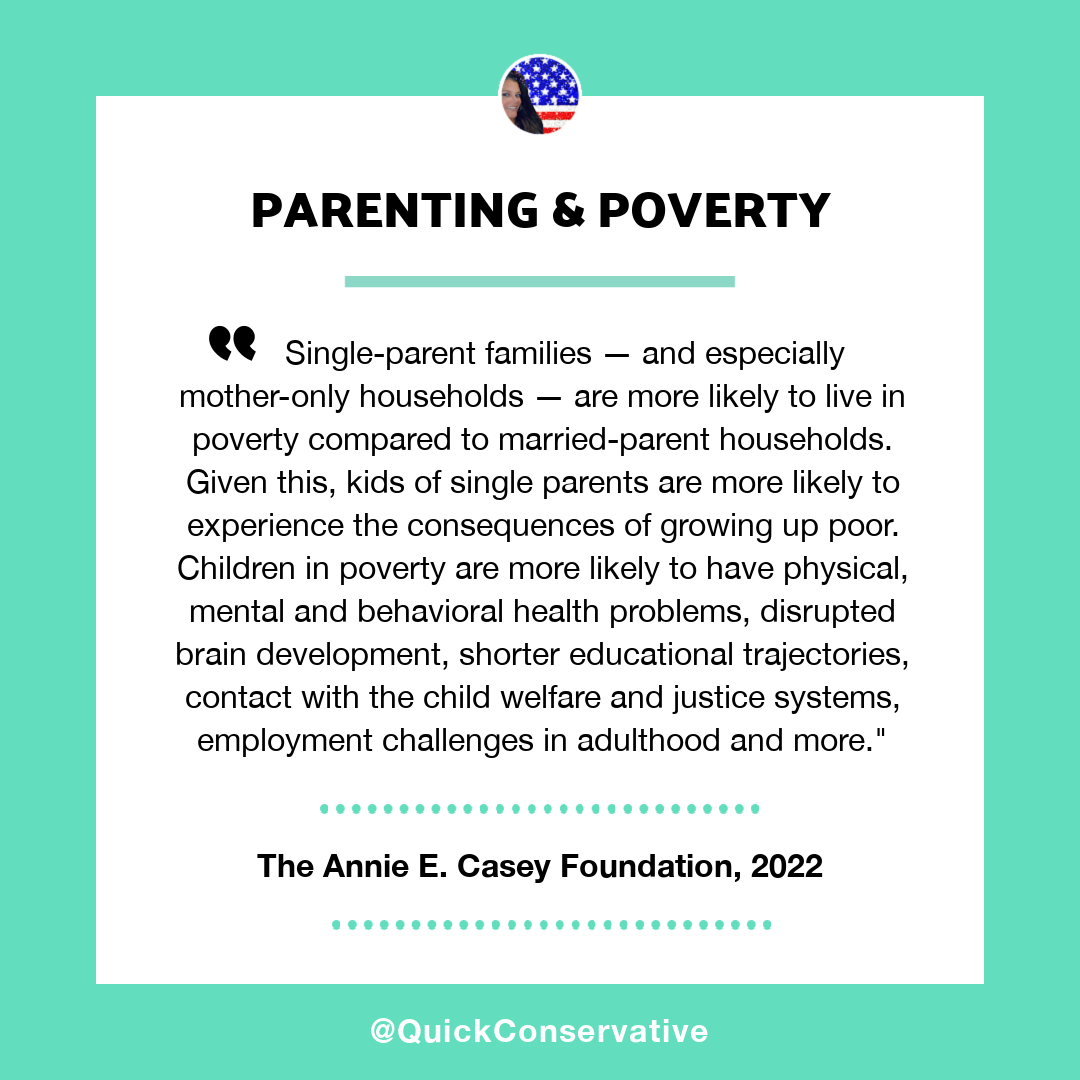
Single-parent families — and especially mother-only households — are more likely to live in poverty compared to married-parent households. Given this, kids of single parents are more likely to experience the consequences of growing up poor. Children in poverty are more likely to have physical, mental and behavioral health problems, disrupted brain development, shorter educational trajectories, contact with the child welfare and justice systems, employment challenges in adulthood and more." - The Annie E. Casey Foundation, 2022
Annie E. Casey Foundation. (2019). Families with related children that are below poverty by family type in the United States. Kids Count Data Center.
Annie E. Casey Foundation. (2019). Children in single-parent families by race and ethnicity in the United States. Kids Count Data Center.
Annie E. Casey Foundation. (2022). Child Well-Being in Single-Parent Families.
Livingston, G. & Cohn D'Vera. (2013). Record Share of New Mothers are College Educated. Pew Research Center.
Annie E. Casey Foundation. (2019). Child population by household type in the United States. Kids Count Data Center.
Harrison, R. (2015). Teens From Single-Parent Families Leave School Earlier. New York University.
Ziol-Guest, K.M., Duncan, G.J., and Kalil, A. (2015). One-Parent Students Leave School Earlier. Education Next, 15(2).
Hurst, K. (2022). Rising share of Americans see women raising children on their own, cohabitation as bad for society. Pew Research Center.