Gun Statistics Both Sides Need to Know
Republicans and Democrats agree on more than they think


Republicans and Democrats agree on more than they think

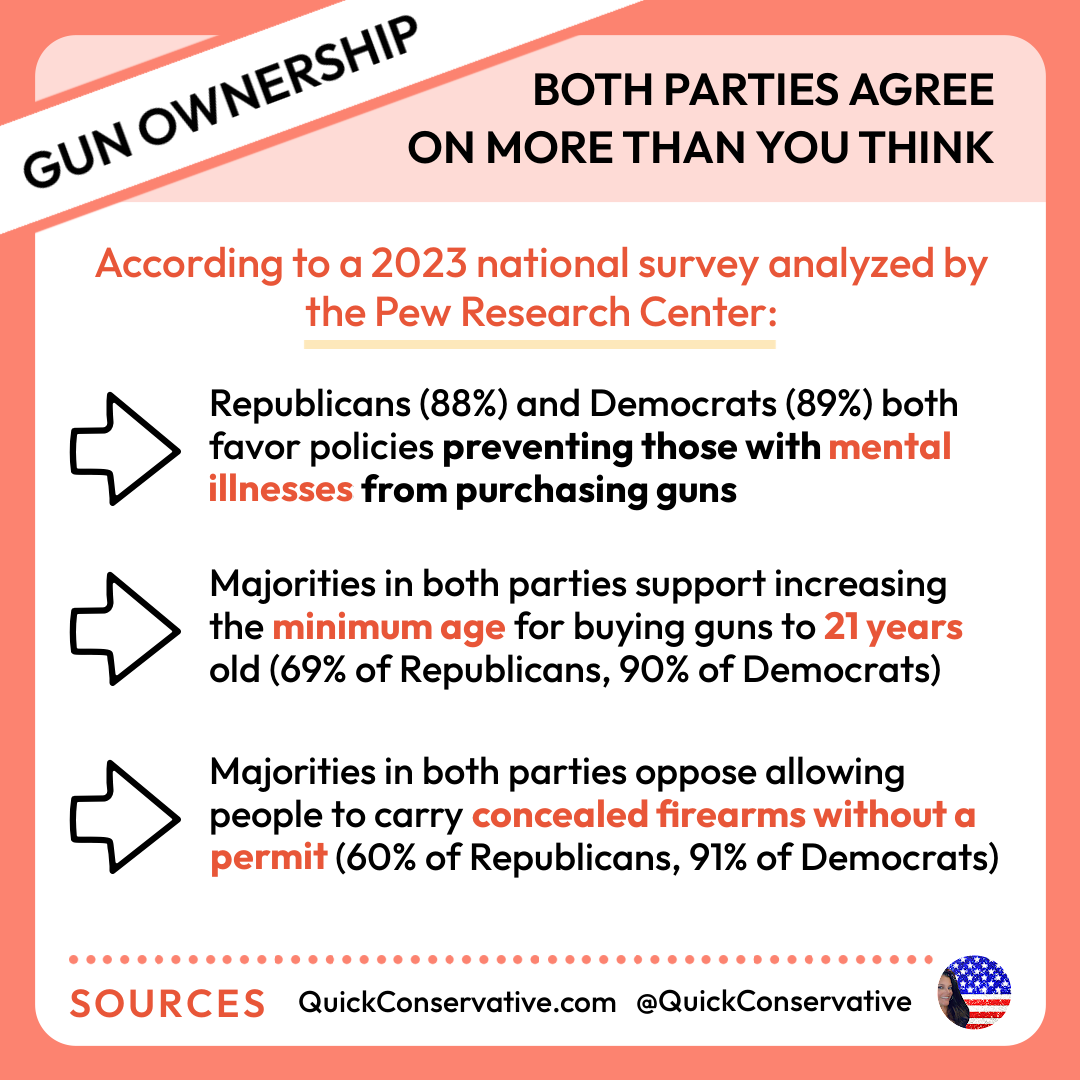
Republicans (88%) and Democrats (89%) both favor policies preventing those with mental illnesses from purchasing guns.
Majorities in both parties support increasing the minimum age for buying guns to 21 years old (69% of Republicans, 90% of Democrats).
Majorities in both parties oppose allowing people to carry concealed firearms without a permit (60% of Republicans, 91% of Democrats).
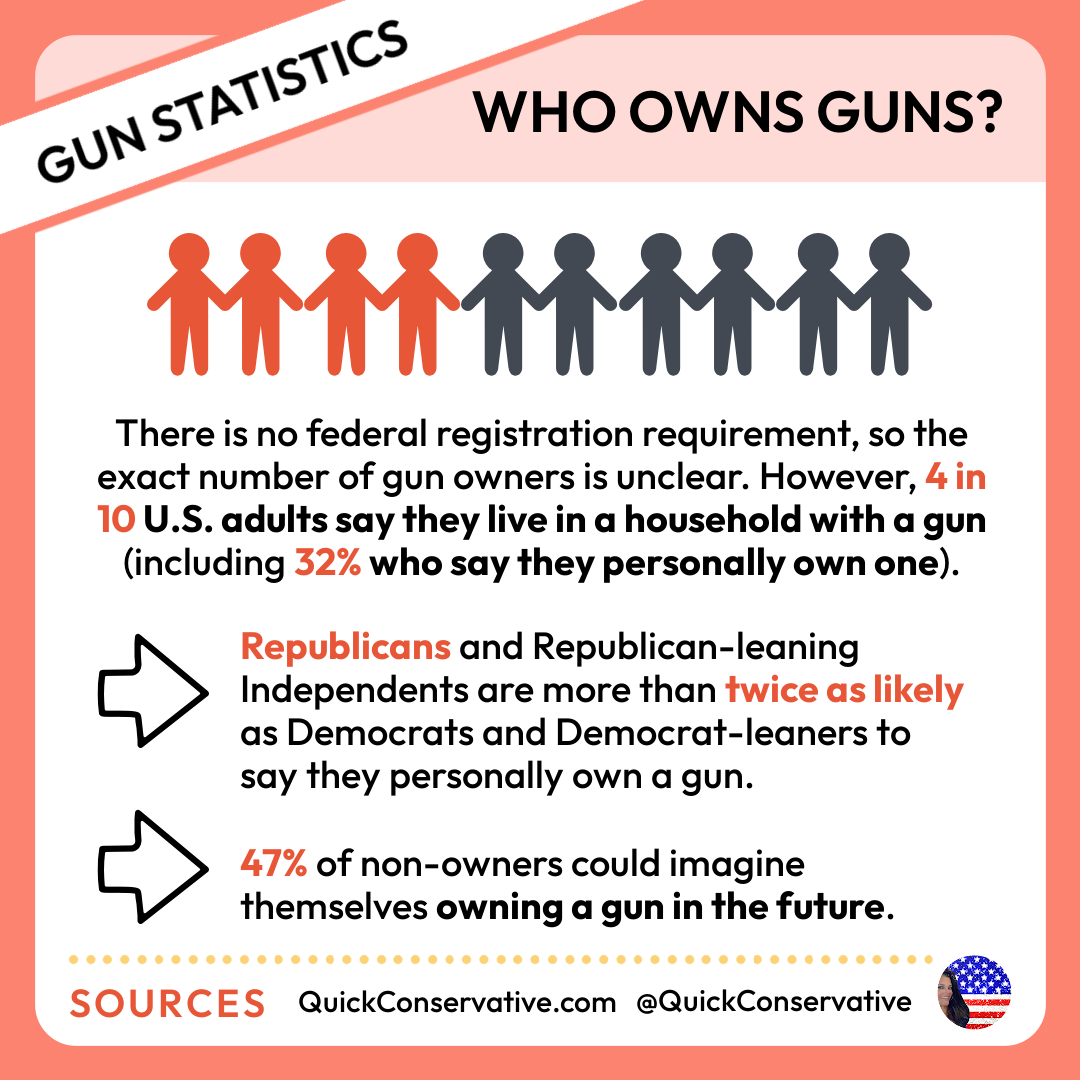
There is no federal registration requirement, so the exact number of gun owners is unclear. However, 4 in 10 U.S. adults say they live in a household with a gun (including 32% who say they personally own one).
These figures are supported by an earlier analysis conducted by researchers with NORC at the University of Chicago - looking at three different surveys - that found, on average, self-reported household gun ownership floated around 40.6%, while personal ownership was lower at 28.4%, during 2006-2013.
Republicans and Republican-leaning Independents are more than twice as likely as Democrats and Democrat-leaners to say they personally own a gun.
Forty-seven percent of non-owners could imagine themselves owning a gun in the future.
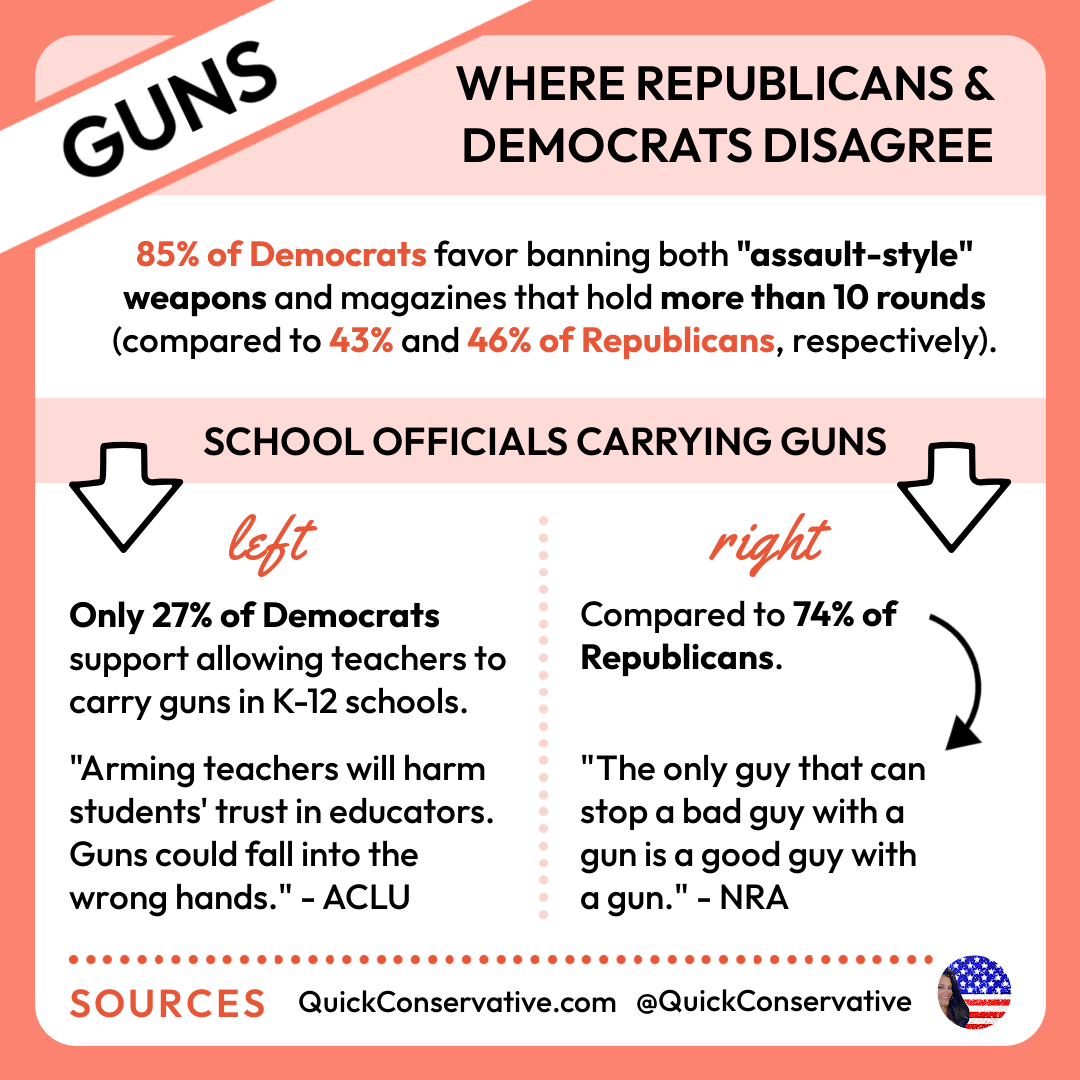
Eighty-five percent of Democrats favor banning both "assault-style" weapons and magazines that hold more than 10 rounds (compared to 43% and 46% of Republicans, respectively).
According to the ACLU West Virginia, arming teachers will harm students' trust in educators. The organization also warns that guns could fall into the wrong hands.
According to NRA CEO Wayne LaPierre:
The only guy that can stop a bad guy with a gun is a good guy with a gun.
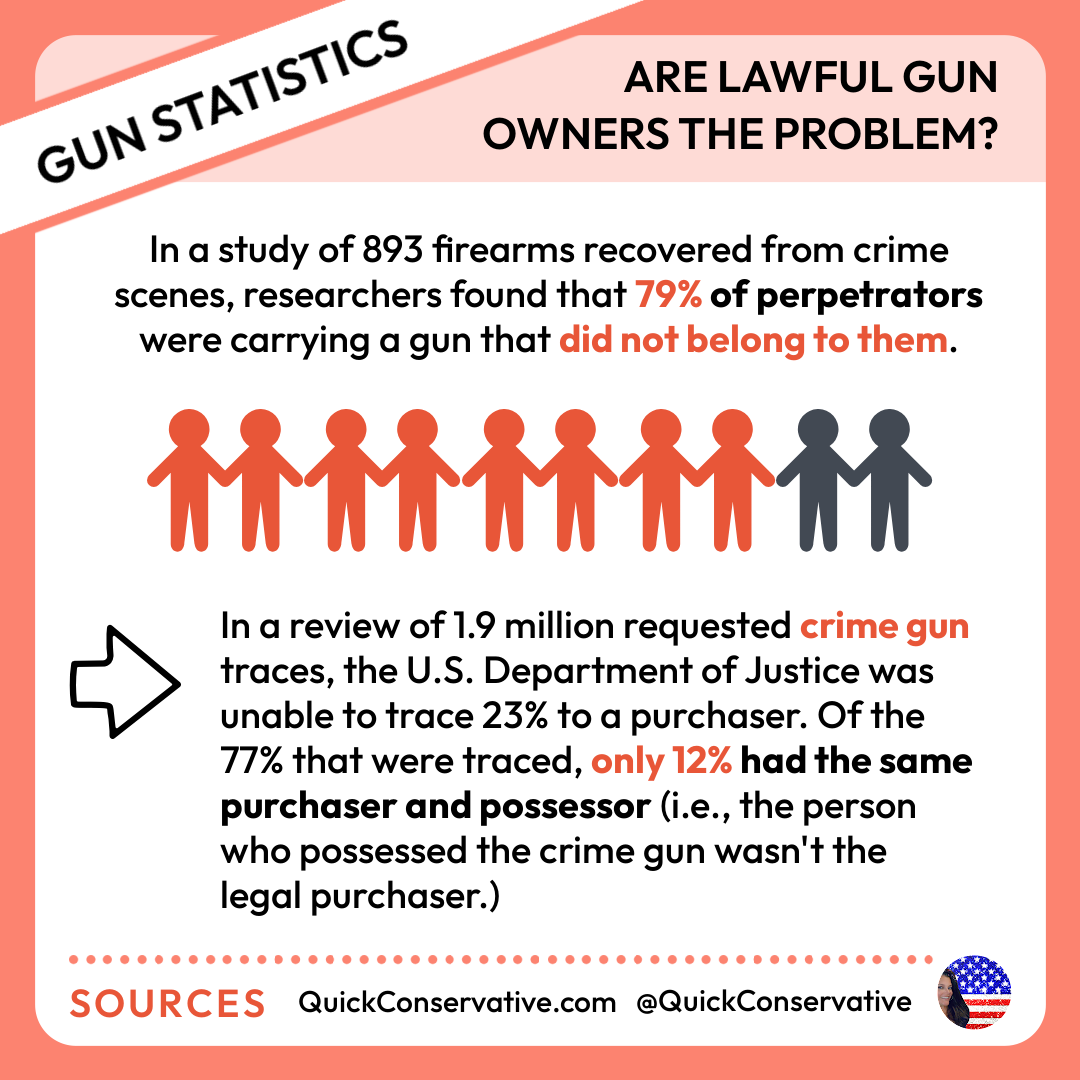
In a study of 893 firearms recovered from crime scenes, researchers found that 79% of perpetrators were carrying a gun that did not belong to them.
In a review of 1.9 million requested crime gun traces, the U.S. Department of Justice was unable to trace 23% to a purchaser. Of the 77% that were traced, only 12% had the same purchaser and possessor (i.e., the person who possessed the gun during the crime).
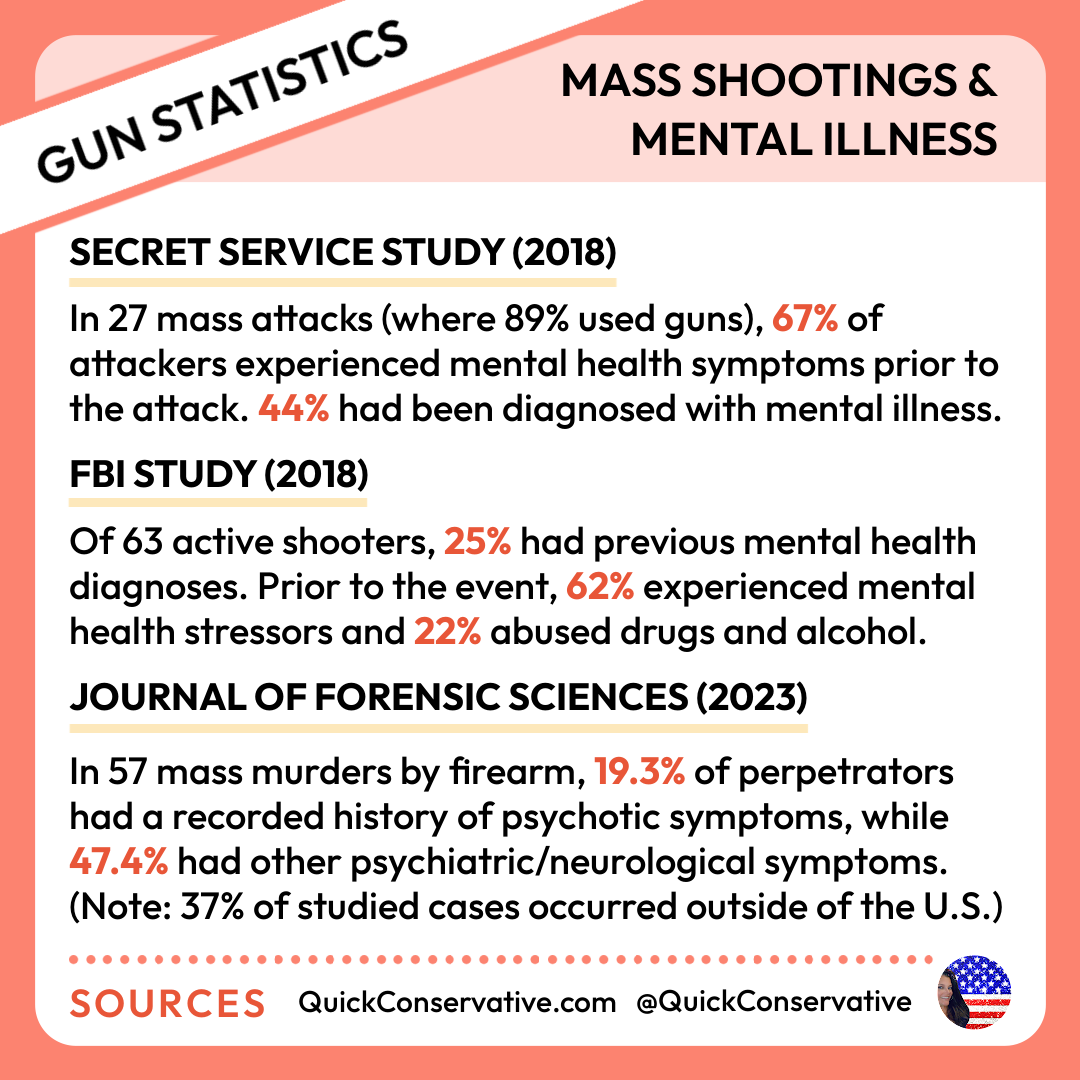
In 27 mass attacks (where 89% used guns), 67% of attackers experienced mental health symptoms prior to the attack. Forty-four percent had been diagnosed with mental illness.
Of 63 active shooters, 25% had previous mental health diagnoses. Prior to the event, 62% experienced mental health stressors and 22% abused drugs and alcohol.
In 57 mass murders by firearm, 19.3% of perpetrators had a recorded history of psychotic symptoms, while 47.4% had other psychiatric/neurological symptoms. (Note: 37% of studied cases occurred outside of the United States.)
Schaeffer, K. (13 September 2023). Key facts about Americans and guns. Pew Research Center.
Smith, T.W., Laken, F., Son, J. (October 2015). Gun Ownership in the United States: Measurement Issues and Trends. NORC at the University of Chicago: GSS Methodological Report No. 123.
ABC News. (2 March 2018). 13 questions about guns in the United States and the surprising answers.
ACLU West Virginia. (25 January 2023). Four Reasons Why Arming School Teachers Won't Make Schools Safer.
BBC. (12 December 2012). NRA: "Good Guys with Guns Stop Bad Guys with Guns".
Fabio, A., Duell, J., Creppage, K., O'Donnell, K., & Laporte, R. (2016). Gaps continue in firearm surveillance: Evidence from a large U.S. City Bureau of Police. Social Medicine, 10(1): 13-21.
ATF Bureau of Alcohol, Tobacco, Firearms and Explosives. (2023). National Firearms Commerce and Trafficking Assessment (NFCTA): Crime Guns - Volume Two. U.S. Department of Justice. See: Part III: Crime Guns Recovered and Traced within the United States and its Territories, Pages: 2, 26.
Girgis, R.R.,Rogers, R.T., Hesson, H., Lieberman, J.A., Appelbaum, P.S., Brucato, G. (2023). Mass murders involving firearms and other methods in school, college, and university settings: Findings from the Columbia Mass Murder Database. Journal of Forensic Sciences, 68: 207-11.
Silver, J., & Simons, A., Craun, S. (2018, June). A Study of the Pre-Attack Behaviors of Active Shooters in the United States Between 2000 and 2013. Washington, DC: Federal Bureau of Investigation United States Department of Justice.
United States Secret Service. (2018). Mass Attacks in Public Spaces. Washington, DC: National Threat Assessment Center.
Treatment Advocacy Center: Office of Research & Public Affairs. (2018). Serious Mental Illness and Mass Homicide.